A commercial door works harder than almost any other part of a building. It opens and closes hundreds of times a day, carries the weight of glass and metal, and protects the business after hours. When a door starts to drag, slam, fail to latch or resist opening, the problem rarely fixes itself. Left alone, small wear turns into a security risk, a safety hazard and an emergency repair at the worst possible time.
This article explains what commercial door maintenance covers, the warning signs property managers and business owners should watch for, and when to call a commercial locksmith.
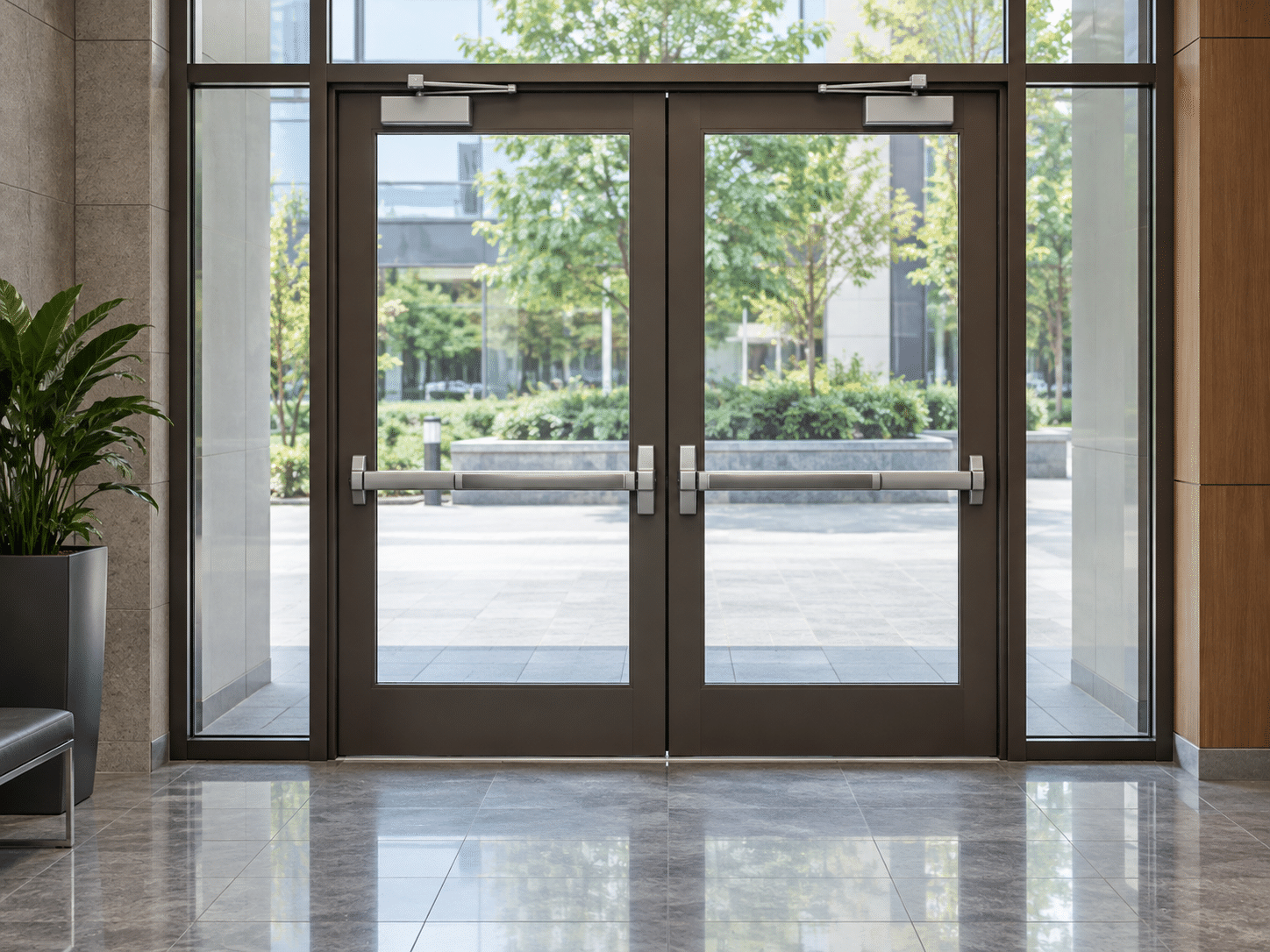
Why commercial doors wear out
A residential door might cycle a dozen times a day. A storefront, office or school door can cycle hundreds of times, in every kind of weather, pushed by carts, deliveries and crowds. Heat, cold, wind and building settlement all work on the frame and hardware over time. Even a well-installed door slowly drifts out of adjustment.
The parts that need attention
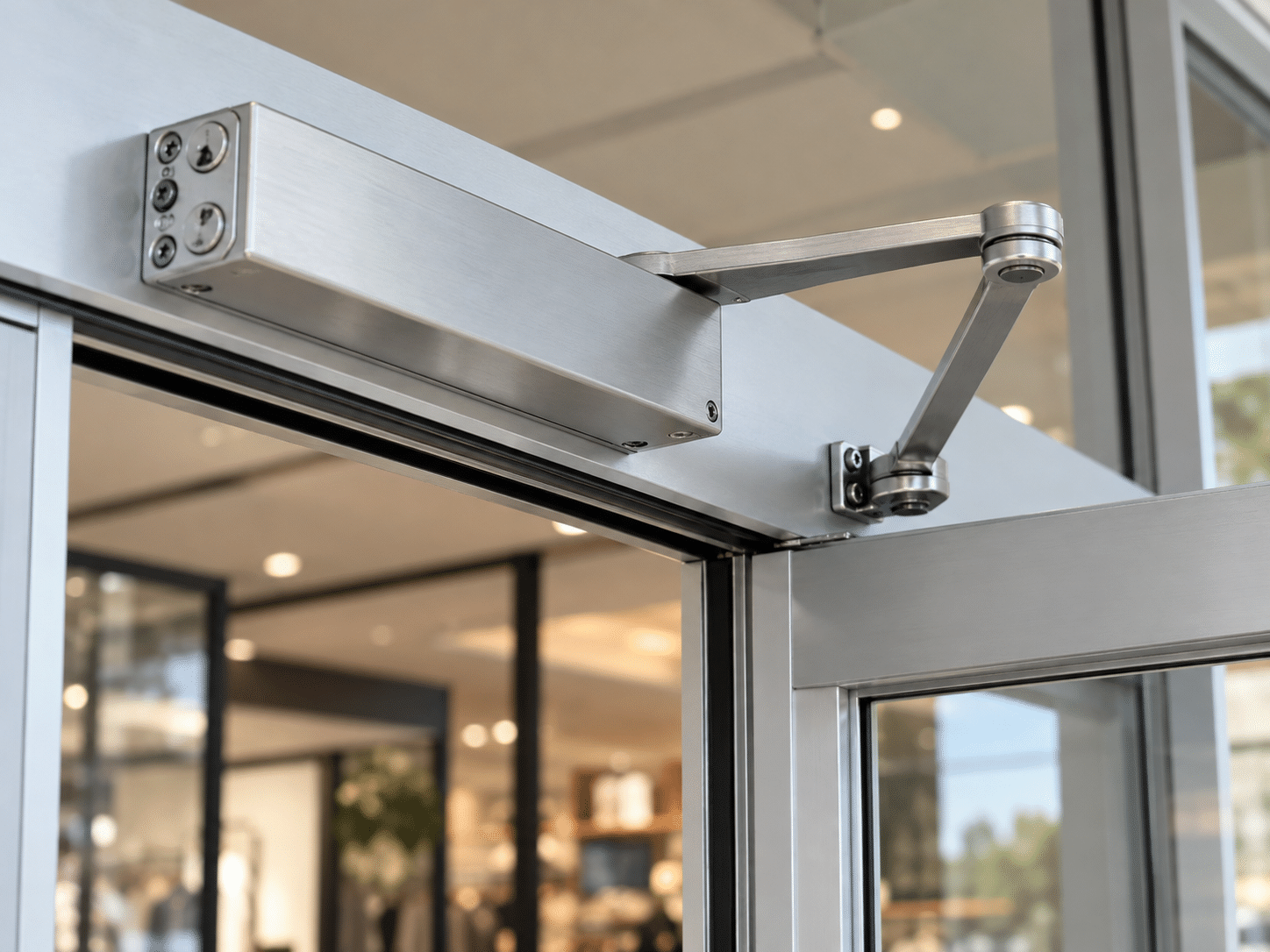
Door closers
The closer controls how the door opens and shuts. A closer that leaks oil, slams the door or lets it drift open has reached the end of its service life or needs adjustment. A properly adjusted closer closes the door firmly and quietly and lets the latch engage every time.
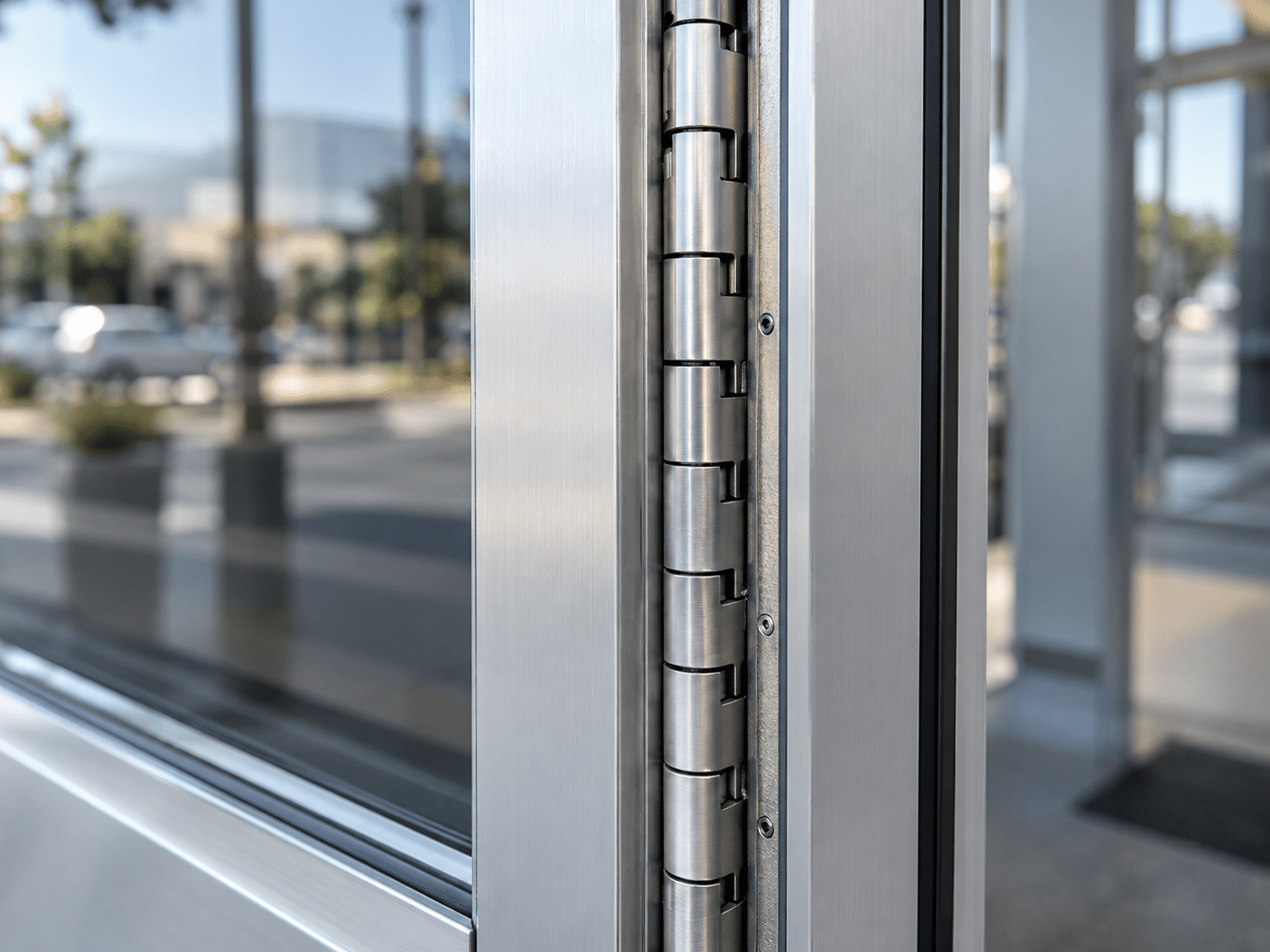
Hinges, pivots and continuous hinges
Worn hinges and pivots let the door sag. The first sign is usually a door that rubs the frame or the floor, or a gap that looks different at the top than at the bottom. Sagging puts extra strain on the lock, the latch and the closer, so one worn part quickly becomes three.
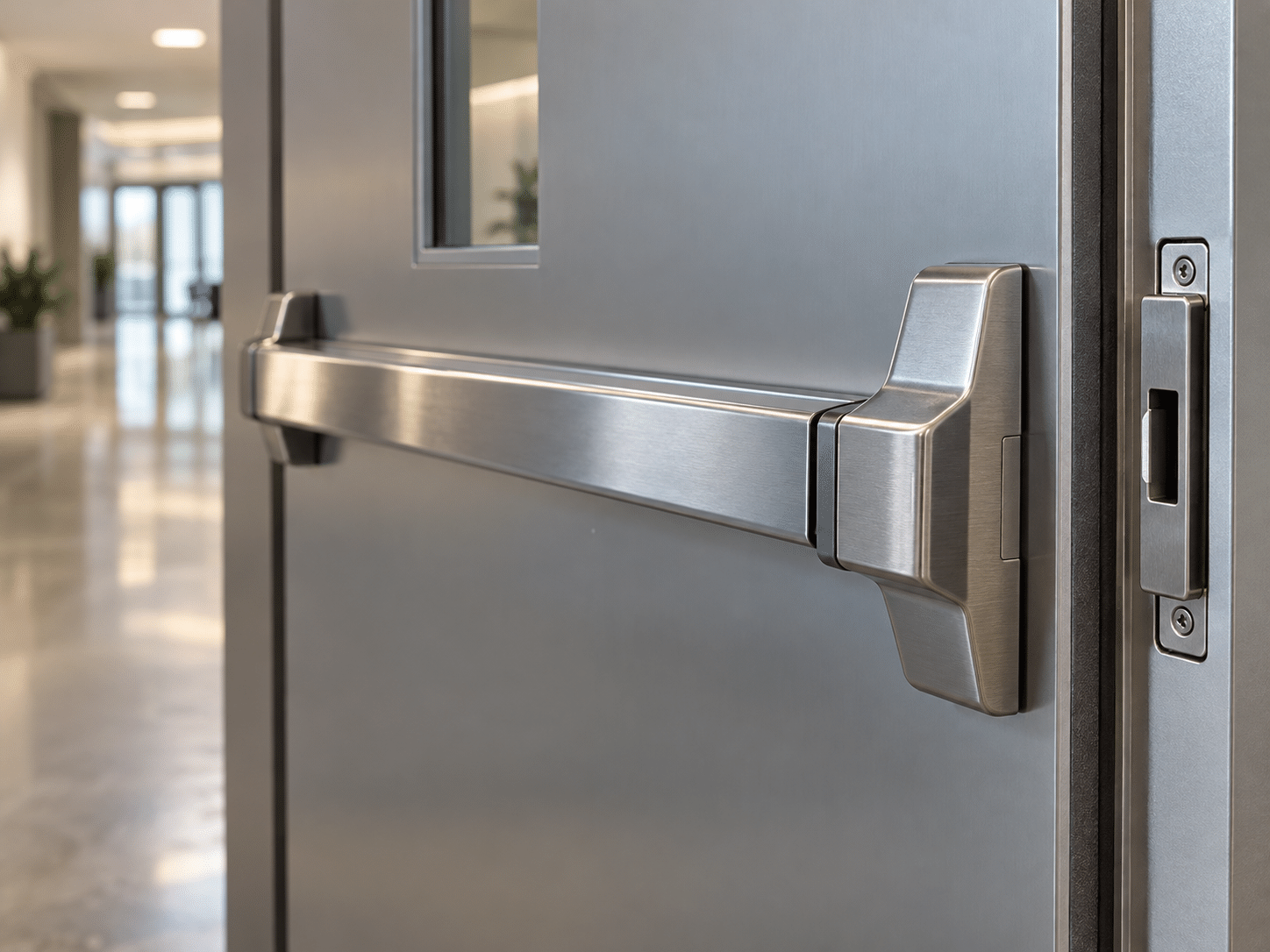
Panic bars and exit devices
Exit devices take constant abuse on busy doors. A push bar that sticks, rattles or no longer retracts the latch fully is both a daily annoyance and a life-safety concern. Exit hardware should operate smoothly with one push, every time.
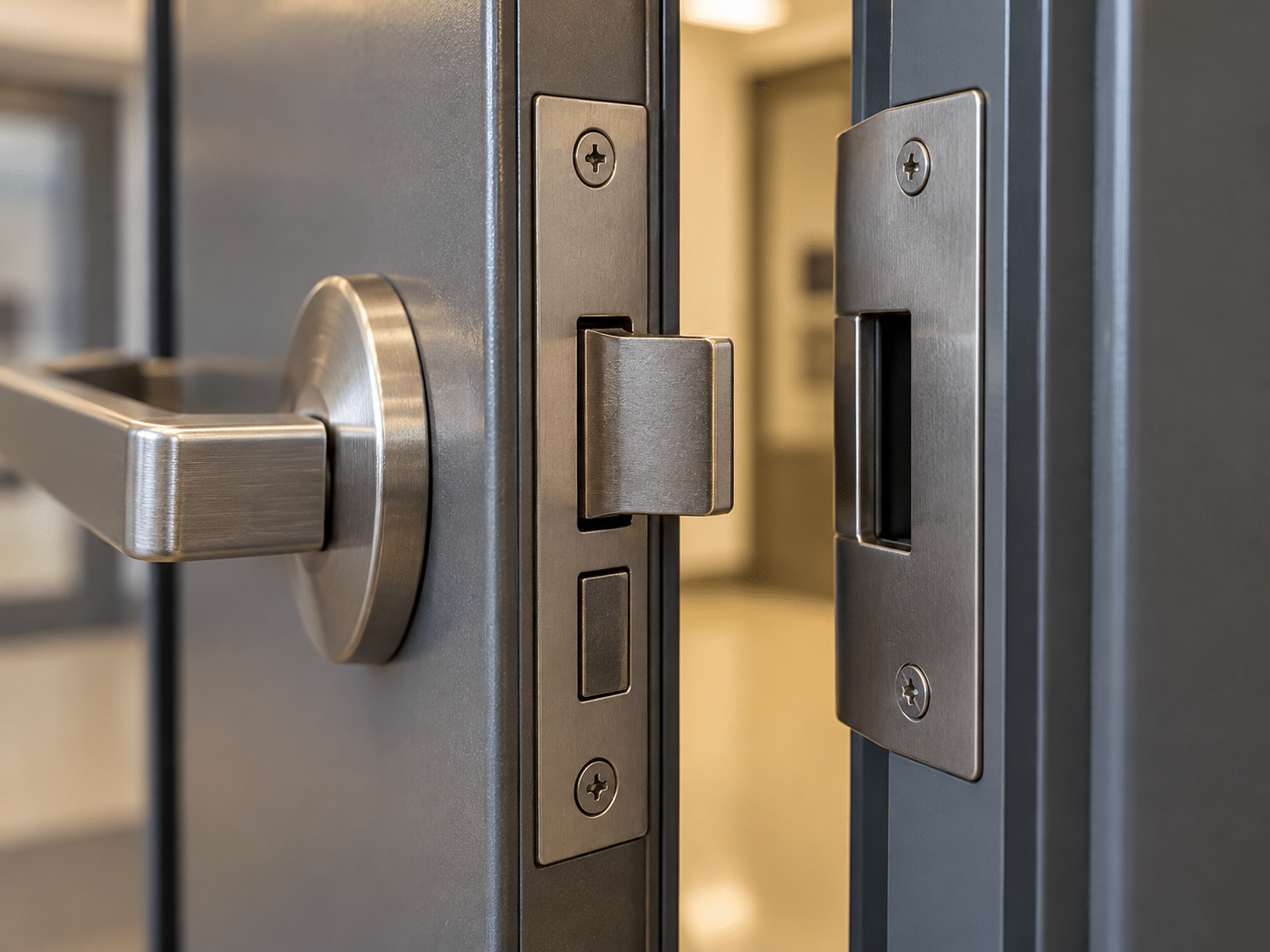
Locks, latches and strikes
A lock can be in perfect condition and still fail to secure the door if the latch no longer meets the strike cleanly. Misalignment is one of the most common findings on a maintenance visit, and it is usually an adjustment, not a replacement.
Warning signs worth acting on
- The door drags on the frame or floor, or rubs at the top corner.
- The latch does not engage unless the door is pulled or pushed.
- The closer slams the door or lets it hang open.
- The push bar sticks, rattles or feels loose.
- The key turns harder than it used to, or only from one position.
- Drafts, light or water appear around the door edges.
Note what you observe without forcing the door or adjusting emergency-exit hardware yourself. If the issue affects an emergency exit, raise it promptly with the person responsible for building safety.
What a maintenance visit covers
A professional visit looks at the whole opening, not just the part that squeaks: the door and frame condition, hinges or pivots, closer operation, exit device function, lock and latch alignment, and any electrified hardware tied into access control. Many problems are resolved with adjustment, lubrication, fasteners and small parts. When a component is genuinely at the end of its life, replacing it before it fails is almost always cheaper than an emergency call after it does.
Repair or replace
Most commercial door problems are repairable. Replacement makes sense when the door or frame is damaged beyond adjustment, when parts are no longer available, or when the business wants to upgrade security or accessibility at the same time. A commercial locksmith can assess the door, frame, push bar and closer together and recommend the practical option.
Commercial door maintenance in Brooklyn and New York City
iLocksmiths has served Brooklyn and New York City for more than 15 years. We service commercial doors of every type: storefront aluminum and glass doors, steel doors, wood office doors and fire-rated openings. Our commercial work includes door closers, panic bars and exit devices, lock repair and replacement, rekeying, master key systems, automatic door operators and access control. If a door at your office, storefront or managed property is dragging, slamming or not latching, we can assess the full opening and put it right.
Call us at (718) 504-5625 to schedule a visit, or visit ilocksmiths.com to see our commercial locksmith services across Brooklyn and all five boroughs.